If you're wondering what to do in Tokyo at night, here's the honest answer from a guide who has lived here since 2016: skip the 25-item listicle. A good Tokyo night is a ladder: a sunset view, a smoky yokocho counter, two or three tiny bars, a bowl of ramen and a decision about the last train. Here's how we actually run that night, neighborhood by neighborhood, with the etiquette and money details nobody mentions until you're at a six-seat counter wondering about the pickles you didn't order.
What to Do in Tokyo at Night: How the Evening Actually Runs
Tokyo nightlife runs on the train clock. On most lines the last train leaves between about midnight and 12:30am, and the first trains start again around 5am. Everything in between is a taxi or a commitment. Locals plan around it: food and drinks from 7pm, a second or third bar by 10pm, then a dash for the last train or a night that ends at dawn.
The second thing is scale. The best places are small: six stools at a counter, a standing bar under the tracks, one cook at the grill. Hence hashigo-zake (literally "ladder drinking"): a drink or two and a snack, pay, move on. It's how you see three neighborhoods in one evening instead of four hours in one chain bar.
Finally, the basics: bring cash, bring your passport, and remember that the legal drinking age in Japan is 20. Plenty of small bars still don't take cards, and clubs check ID at the door. Budget roughly 500–700 yen a drink in small bars, plus any otoshi or seat charge.
Start at Sunset: Free Views Before the Bars Open
You don't need to pay for a skyline. The observation decks at the Tokyo Metropolitan Government Building in Shinjuku are free and look west toward the mountains; on a clear winter evening you can sometimes pick out Mt. Fuji before the light goes. Hours change, so check the official site first.
Starting in Shibuya? Watch the Scramble Crossing from the glass walkway between Shibuya Station and Mark City, beside Taro Okamoto's huge mural. It's free and dry when it rains.
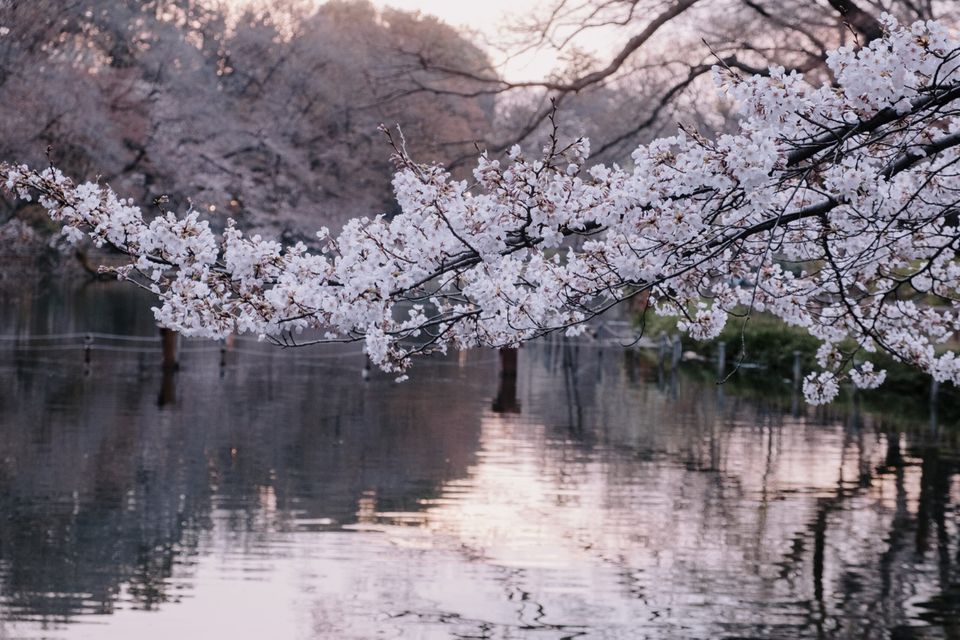
For something slower, walk the Meguro River in Nakameguro at dusk. The canal is lined with small bars and restaurants, and the standing bars under the Tokyu Toyoko Line tracks make a relaxed first stop. Outside cherry blossom season (usually late March to early April, when the banks are packed), it's a quiet start to a date night.
Yokocho Alleys: Omoide Yokocho, Golden Gai and Harmonica Yokocho
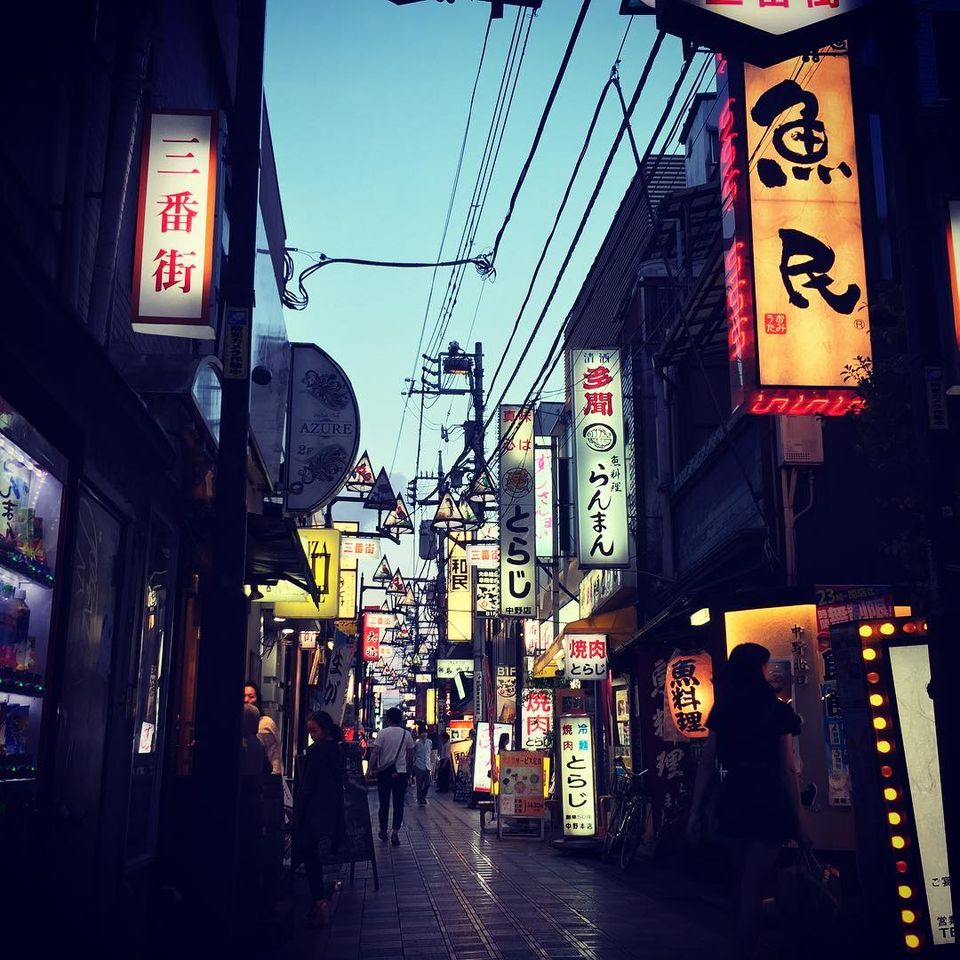
Yokocho are the narrow lanes of tiny bars and eateries that grew up around train stations in the postwar years. Pick by mood: charcoal smoke and skewers (Omoide), one-room theme bars (Golden Gai), or a local crowd and standing bars (Harmonica).
Omoide Yokocho, Shinjuku
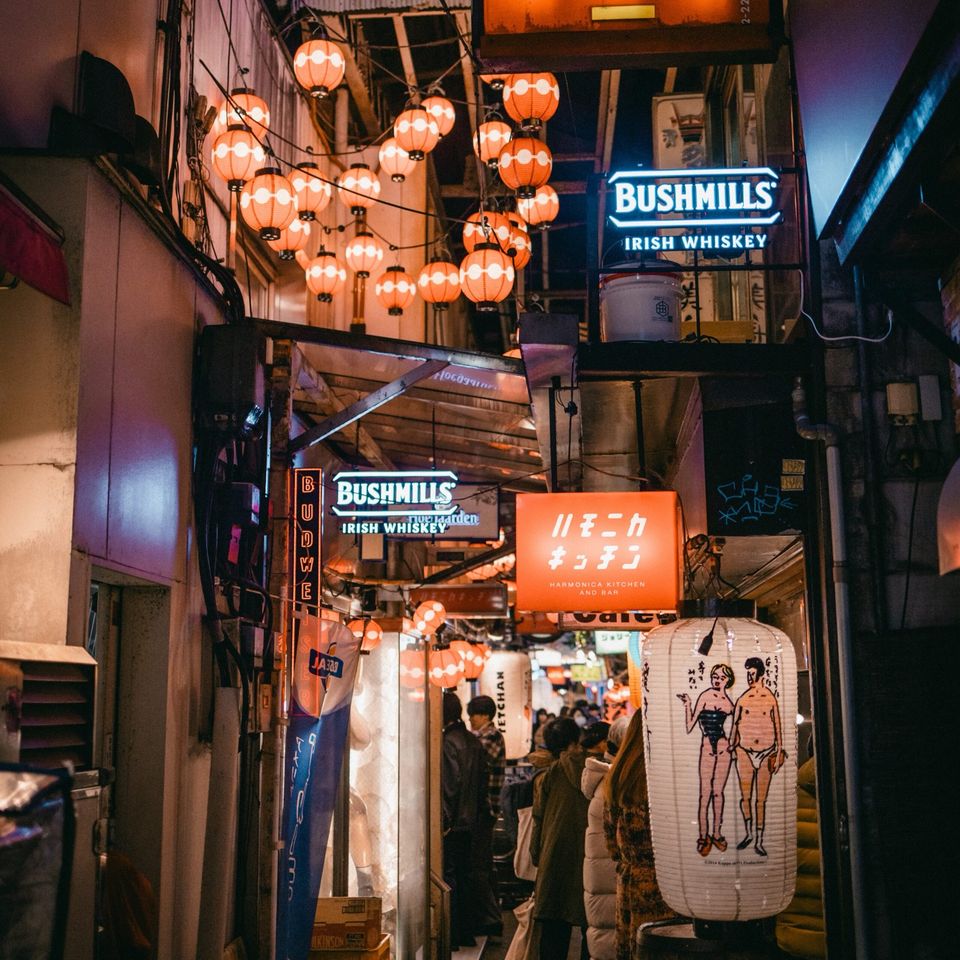
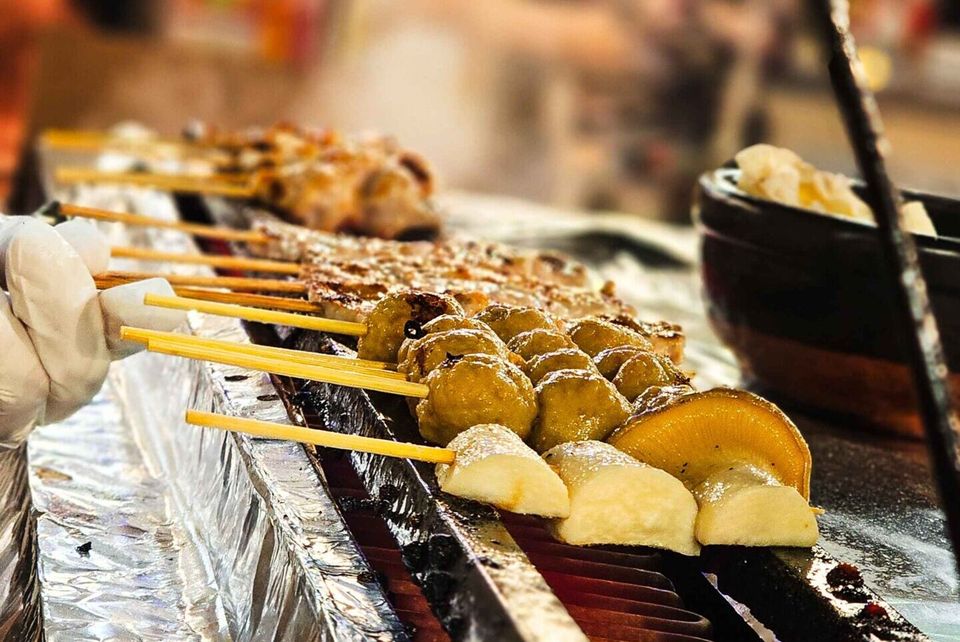
Steps from Shinjuku Station's west exit, Omoide Yokocho ("Memory Lane") is a tight strip of yakitori stalls with charcoal smoke drifting out of every doorway. Grab a stool, order a beer and a few skewers, and watch the cooks work. It's firmly on the tourist map, so go early.
Golden Gai, Shinjuku
On the other side of the station, near Kabukicho, Golden Gai is a grid of narrow lanes packed with bars barely bigger than a walk-in closet. Each has its own owner and obsession: punk, film, jazz, books. Many charge a seating fee that's posted on the door, and a few are regulars-only. Look for English menus or a "welcome" sign; if a bar is full, try the next door.
Harmonica Yokocho, Kichijoji
This is our home turf. Harmonica Yokocho sits right outside Kichijoji Station's north exit, a maze of roughly 100 tiny bars and eateries said to be named for the way they line up like the reeds of a harmonica. From Shinjuku it's about 15 minutes on the JR Chuo Line rapid; from Shibuya, 17–20 minutes on the Keio Inokashira Line. By night it fills with standing bars, sake counters and gyoza joints full of locals rather than tour groups. Our Kichijoji Harmonica Yokocho guide covers it in detail.
Ebisu Yokocho
For groups, Ebisu Yokocho, a covered arcade of small food stalls near Ebisu Station, is livelier: shared tables, loud conversation and strangers who become drinking buddies by the second round.
Bar Hopping Like a Local: Hashigo-Zake Etiquette
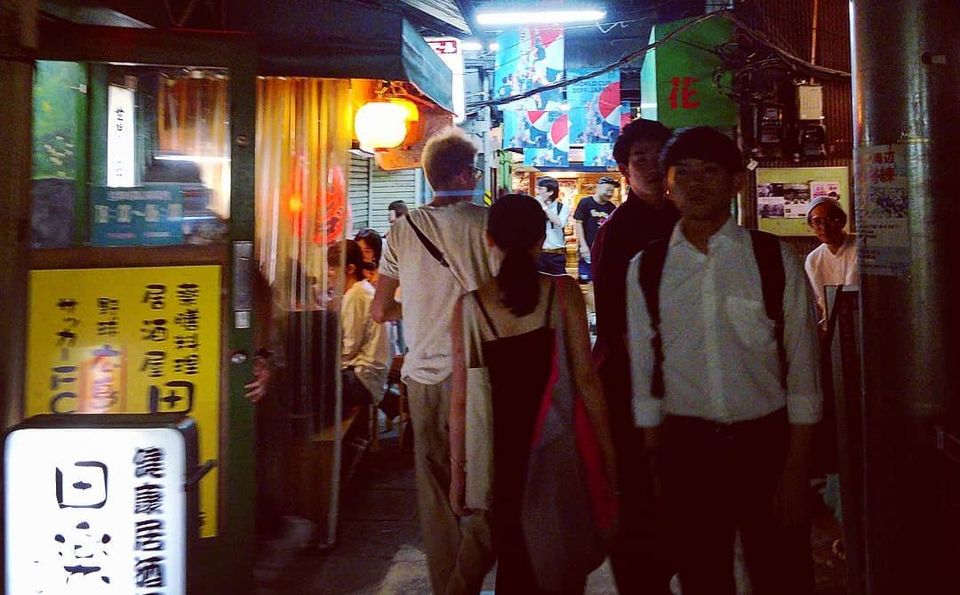
Most first-timer mistakes happen here, and all are easy to avoid:
- The otoshi is a charge, not a gift. At many izakaya a small dish arrives before you order: pickles, edamame, a spoonful of something simmered. It's the otoshi, a per-person table charge, usually a few hundred yen. Don't send it back.
- Expect cover charges in small bars. Golden Gai and similar spots often add a seating fee. If nothing is posted, ask before you sit down.
- Carry cash. Card and IC payments are spreading, but many yokocho stalls and small bars are still cash-only.
- One drink per person. In small bars, every guest orders. Three people sharing one beer at a six-seat counter won't go down well.
- Don't tip. It isn't expected and can cause confusion. A sincere "gochisōsama deshita" on the way out does the job.
- Keep your group small. Two or three get seated almost anywhere; eight need a reservation.
- You must be 20. That's the legal drinking age in Japan, and some bars, and every club, will ask for ID.
Say "kanpai," let the bartender recommend something, and when your glass is empty, pay and climb to the next rung.
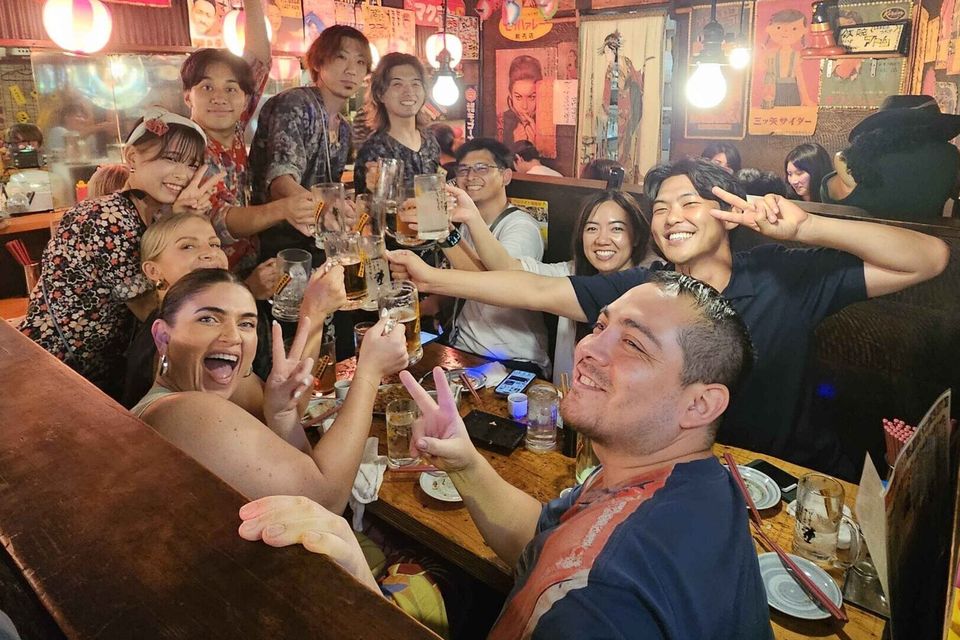
Want to skip the guesswork? Our Kichijoji Hidden Bar Hopping tour ($120 per person, Tuesday to Sunday, 7 to 11 p.m., max 8 guests) spends four hours in Kichijoji and Harmonica Yokocho: bars you'd walk straight past, a variety of Japanese cocktails and etiquette tips, and we handle the ordering and the conversation with the owners, with full interpretation by a trilingual guide. Guests pay for their own drinks, roughly 500–700 yen each. Meet at Kichijoji Station's Park Exit; guests must be 20 or over.
Late-Night Food After the Second Bar
Around the second bar, hunger hits. Ramen shops stay open late in every major nightlife area, and many use a ticket machine at the entrance: pay first, hand over the ticket, sit down. Many branches of the gyudon (beef bowl) chains run 24 hours, and the convenience store always has onigiri and fried chicken.
For something better than a quick bowl, plan a late dinner: serious yakitori and sushi counters close their kitchens well before the bars. Our favorite late spots are in where to eat in Tokyo at night.
Karaoke, Live Music and Clubs Until the First Train
Missed the last train? Then commit; you have about five hours to fill:
- Karaoke. Private rooms are rented by the hour, often with all-you-can-drink plans. A few hours of singing takes you neatly to the first train.
- Live music in Shimokitazawa. This neighborhood of vintage shops and small theaters is full of "live houses," compact venues with indie bands most nights. Expect a ticket plus a one-drink order at the door.
- Clubs in Shibuya. Shibuya is the center of Tokyo's club scene, with venues that get going after midnight and run until morning. Bring your passport; ID checks are standard and nobody under 20 gets in.
Shibuya has a quieter side, too. Nonbei Yokocho ("Drunkard's Alley"), a short row of tiny bars beside the train tracks, is a good place to land if clubs aren't your thing.
Staying Safe: Touts, Cover Charges and Missing the Last Train
Is Tokyo safe at night? Overall, yes. It's a comfortable city to be out late, solo travelers included. The problems we see are predictable:
- Ignore street touts. In Kabukicho and parts of Roppongi, people will approach you offering cheap drinks or a "special" bar. Don't follow them. Tout bars are where shocking bills happen.
- Know the price before you sit. No prices on the menu and no posted charge is a red flag. Ask first.
- Watch the clock. Check your last train in a route app before your second drink, not after your fourth. Missing it means a taxi (fares carry a late-night surcharge of about 20% between 10pm and 5am), or staying out until the first trains around 5am.
- Take the party inside. Shibuya Ward bans street drinking around the station at night (6pm to 5am), so finish your can before you hit the crossing.
- Keep your phone charged. After midnight you'll lean on maps and a route app; if the battery dies, any konbini sells cables and power banks.
Traveling solo? Choose counter bars, where the bartender and regulars pull you into the conversation.
Let a Local Plan Your Tokyo Night
The plan in one line: a free view around sunset, a yokocho counter by 7pm, two or three small bars between 9pm and midnight, ramen, then the last train between midnight and 12:30am, or a karaoke room until 5am. Alejandro has lived in Tokyo since 2016 and has taken more than 1,000 guests through this routine.
Ready for your night out? Join our Kichijoji Hidden Bar Hopping tour for a small-group crawl through Harmonica Yokocho, or book the Private Tour Local Bar Hopping ($750 per group): four hours with everything in the group tour, plus a complimentary hangover-cure drink and 2 hours of unlimited food and drinks at a special bar, private for you and your friends. Tours are paid in full at booking and dates can't be refunded, so pick your night carefully and book ahead for Fridays and Saturdays.